


Share this link via
Or copy link
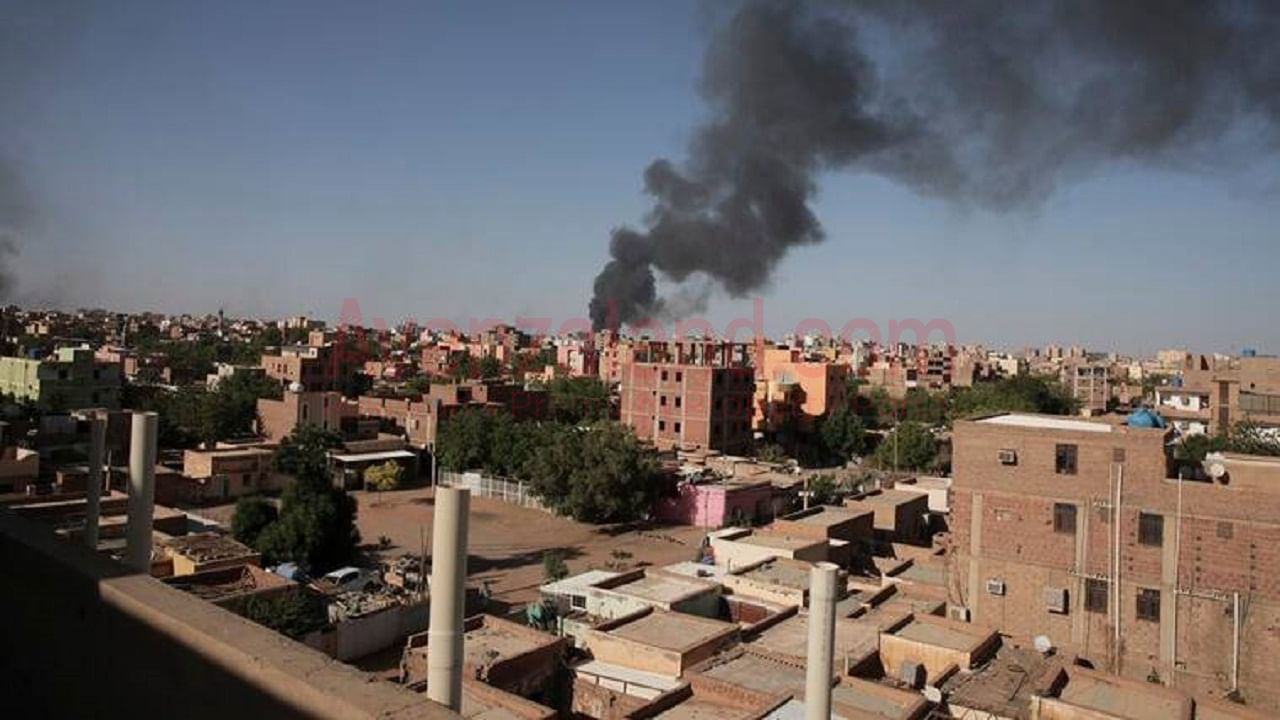
Since April 15, fighting in Sudan has resulted in hundreds of deaths, a humanitarian catastrophe that has forced thousands of people to abandon their homes, and the evacuation of foreign nationals by unstable nations.
After 10 days of urban fighting, a 72-hour truce between the warring generals in Sudan was finally ratified on Tuesday.
The paramilitary Rapid Support Forces (RSF) and the Sudanese army had been at odds for months until the two organizations joined forces in October 2021 to overthrow a civilian administration.
An international-backed strategy to start a new transition involving civilian parties was what finally resolved the conflict. On the fourth anniversary of the ouster of long-reigning Islamist despot Omar al-Bashir by a popular revolt, a final agreement was scheduled to be signed earlier in April.
Both the army and the RSF were obliged to yield authority under the plan, and two matters, in particular, proved to be contentious: the timeline for the RSF's integration into the regular armed forces and the date for the army's formal transfer to civilian control.
Both sides blamed the other for starting the brawl when it started. As it advanced on critical strategic positions in Khartoum, the RSF claimed that the army had attempted to seize total control in a conspiracy with Bashir loyalists. The army had accused the RSF of unlawful mobilization in the days prior.
General Abdel Fattah al-Burhan, chief of the army and president of Sudan's ruling council since 2019, and RSF leader General Mohamed Hamdan Dagalo, also known as Hemedti, are the main players in the power battle.
Hemedti allied himself more closely with civilian groups from a coalition, the Forces for Freedom and Change (FFC), that shared power with the military between Bashir's fall and the coup in 2021 as the plan for a new transition took shape.
Analysts and diplomats agreed that this was a part of Hemedti's plan to establish himself as a statesman and solidify his place at the heart of power. Both the FFC and Hemedti, who amassed a fortune through gold mining and other business endeavors, emphasized the requirement to exclude Bashir loyalists and veterans with Islamist leanings who had reestablished themselves after the coup and had strong military origins.
The Bashir supporters rejected the agreement for a new transition, along with certain pro-army rebel forces who profited from a 2020 peace accord. Hopes were raised by the popular movement that Sudan, with its 46 million people, might end decades of despotism, internal strife, and economic isolation under Bashir. These aspirations may be dashed by the ongoing war, which is concentrated in one of the biggest cities in Africa and threatens to destabilize the Sahel, the Red Sea, and the Horn of Africa. It may also affect the rivalry between Russia and the United States for influence in the area and between regional nations that have courted various Sudanese entities.
Following Bashir's fall, Western powers—including the United States—had shifted their support to a transition to democratic elections. After the coup, they withdrew their financial assistance and supported the new transition and a civilian administration. Energizing abilities In an effort to reduce Islamist influence and promote stability in the region, Saudi Arabia and the United Arab Emirates have also tried to influence the course of events in Sudan.
Gulf governments have sought to invest in a variety of industries, including agriculture, where Sudan has enormous potential, and ports along the Red Sea coast of Sudan.
However, despite a break in the conflict that allowed other countries to remove some of their nationals, there have been few signs of compromise from the warring factions. International parties have urged for humanitarian ceasefires and a return to negotiation.
There may be a big number of refugees as a result of the escalating humanitarian catastrophe in a nation that already depends on help to feed its citizens. Up to 20,000 people have already departed for the nearby country of Chad, 10,000 for South Sudan, and an increasing number are moving north towards Egypt.
Hemedti referred to Burhan as a criminal and accused him of wreaking havoc on the nation, while the army labeled the RSF a rebel group and asked that it be disbanded.
Despite having more resources than the RSF, including air power and an estimated 300,000 soldiers, the Sudanese army still has a significant advantage. The ongoing war comes on top of the ongoing economic catastrophe and the vast humanitarian needs that already exist.
The RSF may rely on support and relations with local tribes in western Darfur, where it was founded by militias who fought with government troops to stifle insurgents in a horrific conflict that grew worse after 2003.
Follow Avenzaland.com, Pakistan's top real estate blog and news, for more intriguing information on lifestyle, travel, and tourism.